
Is Chafing Just a Summer Problem? Why Indian Women Get Rashes Year-Round
If you've ever Googled "why do I get rashes under my breasts" or "inner thigh chafing in winter" — you are not alone.
Millions of Indian women silently deal with chafing, redness, and skin irritation every single day, no matter the season. The popular belief is that chafing is a hot-weather problem. But the truth? Your skin doesn't get a break in October or February. Here is exactly why chafing happens year-round in India — and how picking the right anti chafing cream can make it stop for good.
What Is Chafing, Really?
Chafing occurs when skin rubs repeatedly against skin or fabric, leading to redness, soreness, rashes, and sometimes even raw, broken skin. The most common areas for women are:
- Inner thighs — especially while walking or running
- Under the breasts — from bra bands and trapped sweat
- Groin and bikini line — friction from underwear and tight clothing
- Underarms — from sleeves and bag straps
- Belly folds — particularly in warm and humid conditions
Most women only reach for an anti chafing cream during peak summer. But India's climate, clothing habits, and body chemistry create chafing conditions throughout the entire year.
Why Indian Women Experience Chafing in Every Season
1. Monsoon Season (July–September): Humidity Is the Real Enemy
Humidity is chafing's best friend. Even when it is not scorching hot, moisture trapped between skin and fabric creates the perfect friction environment. Wet fabric chafes harder. Sweat does not evaporate the way it should — you feel the burn before you even realise how much you've been perspiring. This is why "anti chafing cream for monsoon" consistently trends in searches during the rainy months across India.
2. Winter Clothing Creates Hidden Friction
Heavy fabrics — denim, thermal wear, wool blends — trap heat and create constant skin contact. Many women report that inner thigh rashes actually get worse in winter because they are in jeans all day. Seasonal dryness also makes skin more sensitive and prone to tearing under friction. An anti chafing cream applied every morning can prevent hours of winter discomfort.
3. Festive and Wedding Season (October–December): Beautiful Outfits, Painful Skin
Sarees, lehengas, and heavy ethnic wear are gorgeous — but also worn for 8 to 12 hours at a stretch. Petticoats rub the inner thighs raw. Blouse seams dig into underarms. Bra bands press into damp skin under heavy fabric. If you have ever come home from a wedding function with soreness under your breasts or between your thighs — this is exactly why.
4. Year-Round Factors Specific to India
Even in India's cooler months, humidity never fully disappears. Add to that:
- Synthetic fabrics used in daily officewear and ethnic clothing
- Long hours commuting, standing, or working in tight outfits
- Natural body shape — curves and skin folds create more skin-on-skin contact
All of this means using an anti chafing cream is not a seasonal habit. It needs to be part of your everyday routine — just like a moisturiser.
How to Prevent Chafing Before It Starts
The most searched question on this topic is: "How do I stop chafing permanently?" The answer is always prevention — not treatment.
✅ Step 1 — Keep the area clean and dry. Moisture triggers chafing. Pat skin completely dry after bathing, especially in folds and creases.
✅ Step 2 — Apply an anti chafing cream before getting dressed. This is the single most effective step. A quality anti chafing cream forms a protective barrier that reduces skin-to-skin and fabric friction before it begins.
✅ Step 3 — Choose breathable fabrics when possible. Cotton reduces moisture build-up significantly compared to synthetic blends.
✅ Step 4 — Reapply on long or active days. Wearing a saree for hours, exercising, or commuting? Reapplying your anti chafing cream midday keeps the protective barrier intact.
The Right Anti Chafing Cream for Indian Skin
Indian skin — particularly in humid conditions — needs a formula that is lightweight, non-greasy, and completely free from harsh chemicals. Heavy creams clog pores. Chemical-heavy formulas irritate already-sensitive skin.
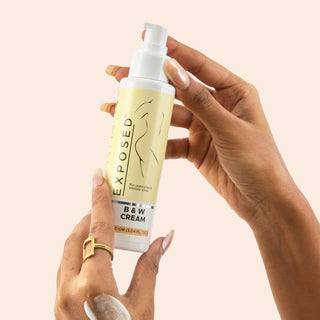
Exposed Sweat Protector — Anti Chafing Cream
An Ayurvedic anti chafing cream blended with Aloe Vera, Rosemary, Almond Oil, Coconut Oil, and Camphor Oil — ingredients that prevent chafing and actively soothe skin that is already irritated or raw.
- ✔ Sulphate-free & Paraben-free — zero harmful chemicals
- ✔ Lightweight, non-greasy texture that absorbs quickly
- ✔ Targets under-boob rashes, inner thigh chafing & groin irritation
- ✔ Safe for sensitive skin — use twice daily
- ✔ Made in GMP-certified premises with Ayurvedic ingredients
Final Word
Chafing is not a summer problem. It is a year-round problem that Indian women quietly endure every single day. Whether it is monsoon humidity soaking your clothes, denim rubbing your thighs in January, or a 10-hour wedding in a heavy lehenga — the friction never truly stops.
Making an anti chafing cream part of your daily routine is the simplest, most effective thing you can do for your skin. Your body deserves that protection every single day.
✦ Suitable for sensitive skin | No artificial colours | No harmful chemicals | Use twice daily for best results.