
Does Anti-Chafing Cream Work on Sensitive Skin? What to Look for Before You Buy
If you have sensitive skin, you've probably hesitated before trying anything new. Redness, burning, breakouts — sensitive skin reacts fast and forgives slowly. So when someone recommends an anti chafing cream, your first question isn't "does it work?" — it's "will it make things worse?" That's the right question. This guide answers it honestly.
Sensitive skin has a compromised or thinner skin barrier. Irritants — even mild ones — can penetrate more easily and trigger inflammation. The very areas where you'd apply an anti chafing cream (inner thighs, underarms, under the breasts, groin) tend to be even more reactive due to constant moisture, heat, and friction.
The problem with many conventional anti chafing cream products isn't the concept — it's the formula. Harmful ingredients hide behind long chemical names and cause more irritation than the chafing itself.
Before buying any anti chafing cream, scan the label for these offenders:
Strip the skin's natural oils, weakening the barrier and making sensitive skin more reactive. A red flag in any anti chafing cream.
Synthetic preservatives that can cause contact dermatitis and are associated with hormonal disruption with prolonged skin contact.
One of the most common triggers for sensitive skin reactions. "Fragrance" on a label can represent dozens of undisclosed chemicals.
Drying, pore-clogging, and heat-trapping — the exact opposite of what a good anti chafing cream should do for friction-prone zones.
A genuinely skin-safe anti chafing cream for sensitive skin should contain:
Nature's most proven skin soother — anti-inflammatory, deeply hydrating, and gentle enough for the most reactive skin. Ideal in an anti chafing cream for hot, humid climates.
Sunflower, almond (Badam), olive, and coconut oils are biocompatible with skin. They protect without clogging and create a natural friction barrier.
Antioxidant-rich and anti-inflammatory. Calms already-irritated skin while protecting against further damage — earns its place in any quality anti chafing cream.
Every ingredient deliberate and tested. No fillers, no synthetic shortcuts. For sensitive skin, an Ayurvedic anti chafing cream is inherently a safer starting point.
So — Does Anti Chafing Cream Actually Work on Sensitive Skin?
Yes — when the formula is right. An anti chafing cream with Aloe Vera, plant oils, and zero sulphates or parabens creates a protective, breathable barrier that reduces friction without aggravating the skin underneath.
The key is ingredients that work with the skin's biology, not against it. The cream should protect, not penetrate the barrier and trigger a reaction.
Clean and completely dry the affected area before applying the anti chafing cream
Apply a moderate amount — no need to layer heavily, the cream creates a barrier with a thin coat
Massage gently until fully absorbed before dressing — don't rush this step
Use twice daily — once before activity in the morning, once before bed for overnight skin recovery
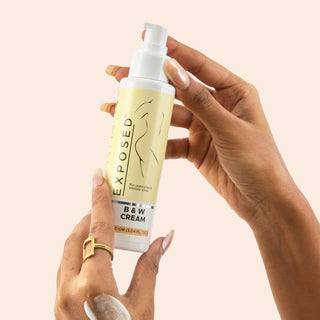
Exposed Sweat Protector — Built for Sensitive Skin
The anti chafing cream that covers what the label promises. No sulphates, no parabens, no harmful chemicals — just a clean Ayurvedic formula made for everyday use on even the most reactive skin.
The Takeaway
Sensitive skin doesn't mean you have to live with chafing. It means you need to be more selective about which anti chafing cream you choose. Read the label. Skip the sulphates and parabens. Choose plant-based, Ayurvedic formulations that are made for skin — not just made to sell.
Your skin is reacting to the wrong ingredients. Give it the right ones.
Sensitive skin deserves an anti chafing cream it can trust.