

Why Does Skin Around Intimate Areas Get Darker With Age? The Real Science Behind It
You noticed it. Maybe gradually, maybe all at once. The skin around your underarms, inner thighs, or intimate zones has become visibly darker. You haven't done anything wrong. It isn't a hygiene issue. Intimate area darkening is one of the most common skin concerns among Indian women — and one of the least talked about. Here is the real science behind why it happens.
Intimate area darkening is a form of hyperpigmentation — an increase in melanin in specific zones including the underarms, inner thighs, bikini line, and groin. It is not a disease. It is a pigmentation response triggered by biology, hormones, and lifestyle. It is entirely normal — and entirely addressable.
Friction — The Most Underrated Cause
The skin in your inner thighs, underarms, and groin is in constant contact with clothing and other skin surfaces. This repeated friction causes micro-trauma to the skin's surface layer. In response, skin produces more melanin as a protective mechanism — causing intimate area darkening that compounds over years.
Tight clothing, synthetic fabrics, and daily physical activity all intensify friction-related intimate area darkening. It worsens with age simply because the cumulative effect compounds over years.
Hormonal Changes — The Invisible Driver
Conditions like PCOS, insulin resistance, and pregnancy cause elevated androgen and insulin levels that directly stimulate melanin production in skin folds and intimate zones. This is why intimate area darkening frequently appears or worsens during puberty, pregnancy, and perimenopause — all periods of significant hormonal change.
Post-pregnancy intimate area darkening is particularly common and often persists long after delivery. Hormonal contraceptives can also influence pigmentation patterns.
Shaving and Hair Removal
Shaving causes repeated micro-abrasion of the skin surface. Each pass of a razor triggers the skin's melanin response — the same mechanism as friction. Over months and years of regular shaving in the underarm and bikini area, this is a direct contributor to intimate area darkening. Waxing and chemical depilatory use cause similar effects.
Accumulation of Dead Skin Cells
Areas that experience high friction also tend to accumulate dead skin cells faster than other parts of the body. This surface buildup appears as dark, dull discolouration — intensifying the appearance of intimate area darkening even when melanin levels haven't changed significantly. Regular, gentle exfoliation is one of the most effective interventions for this type of intimate area darkening.
Deodorants and Chemical Products
Many conventional deodorants and antiperspirants contain alcohol, aluminium compounds, and synthetic fragrances — all of which cause chronic skin irritation in the underarm. This repeated chemical stress triggers melanin production and contributes directly to intimate area darkening over time.
Intimate area darkening is not a flaw. It is a pigmentation response — and it responds remarkably well to the right natural ingredients applied consistently.
— La-elega Wellness
Intimate area darkening responds well to natural ingredients that address melanin production, exfoliation, and skin barrier health simultaneously. Here's what the science-backed formula contains:
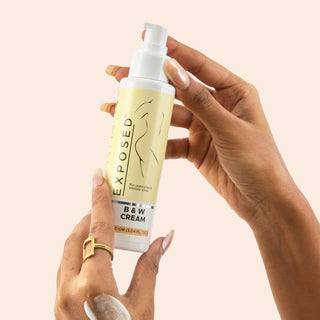
Exposed B&W Brightening & Whitening Cream
India's natural intimate brightening cream — no hydroquinone, no harsh metals, no harmful chemicals. Forest-based ingredients formulated to target dark spots and hyperpigmentation on underarms and intimate areas.
The Bottom Line
Intimate area darkening is not a flaw, a failure, or a sign of poor hygiene. It is a pigmentation response driven by friction, hormones, hair removal, dead skin buildup, and chemical exposure — all of which are manageable with the right knowledge and the right product.
You don't need hydroquinone. You don't need harsh treatments. You need the right daily care with natural ingredients that work with your skin — not against it.
The skin around your most intimate areas deserves the same care and honesty you give everything else.