
Does Scrubbing Remove Dark Spots? The Truth About Exfoliation & Pigmentation
Millions of people scrub their underarms, knees, and intimate areas hoping to clear dark spots — only to find the darkness coming back darker. Here's what's actually happening on your skin, and what genuinely works.
The Short Answer: No, Scrubbing Won't Remove Dark Spots
It's one of the most common skincare misconceptions in India — that scrubbing harder or more frequently will buff away dark spots. But dark spots are a pigmentation response happening deep within the skin's layers, where your scrub cannot reach.
Dark spots form when melanin — your skin's pigment — is overproduced in specific areas due to friction, inflammation, hormonal triggers, or sun damage. A scrub works only on the outermost dead skin cells. The melanin causing your dark spots sits much deeper, in the basal layer of the epidermis. This is why people who scrub aggressively often end up making things worse — not better.
What People Believe vs What's Actually Happening
- Scrubbing removes dark spots
- The more you scrub, the faster results
- Rough scrubs work better on stubborn dark spots
- Scrubbing daily keeps skin bright
- Scrubbing removes dead cells only — not pigment
- Over-scrubbing triggers more dark spots via inflammation
- Rough scrubs damage the skin barrier, worsening darkness
- Daily scrubbing strips moisture, accelerating pigmentation
When Exfoliation Makes Dark Spots Worse
There's a specific skin reaction called Post-Inflammatory Hyperpigmentation (PIH) — and it's the #1 reason aggressive scrubbing backfires on dark spots.
When you scrub too hard, you create micro-tears and inflammation. Your skin's defence response? Produce more melanin to "protect" the area. The result: your dark spots get darker, and new ones may appear around the area you were trying to treat.
You notice redness, peeling, or darkening after scrubbing. These are signs of barrier damage — continuing will make your dark spots significantly harder to treat and may cause lasting pigmentation.
What Actually Removes Dark Spots
Getting rid of dark spots requires targeting pigmentation at the source — not scraping at the surface. Here's what genuinely works:
- Melanin Inhibitors — Vitamin C from lemon and orange directly blocks the enzyme that produces excess melanin, gradually fading dark spots from within
- Anti-Inflammatory Actives — Aloe vera, rose water, and tulsi calm existing inflammation, stopping the cycle that keeps creating new dark spots
- Barrier-Strengthening Oils — Coconut oil, sunflower oil, and olive oil repair the skin's lipid barrier — a healthy barrier means less reactive skin and fewer dark spots over time
- Consistent Twice-Daily Application — Dark spots respond to a proper brightening cream far better than any scrubbing routine. Weeks of consistency shifts pigmentation
- Friction Reduction — Switching from tight clothing and harsh deodorants removes the trigger causing dark spots in the first place, giving your skin a real chance to heal
Target Dark Spots the Right Way
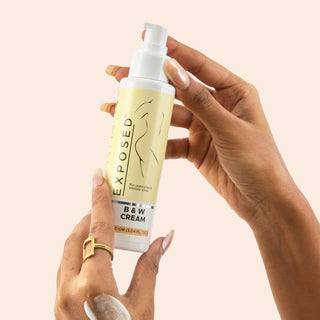
The Exposed B&W Brightening & Whitening Cream combines natural melanin-inhibiting actives — lemon, orange, tulsi, cucumber — with deep moisture agents like coconut oil, aloe vera, and rose water. No hydroquinone. No harsh metals. No harmful chemicals. Apply on clean, dry skin twice a day and let the formula do what no scrub can.
Shop B&W Cream — ₹699How to Exfoliate Safely (Without Worsening Dark Spots)
Gentle exfoliation does have a role — it helps your brightening cream absorb better by clearing dead skin cells. But the keyword is gentle.
Exfoliate once a week maximum on areas with dark spots — not daily. More frequent scrubbing is never more effective.
Use a soft cloth or mild chemical exfoliant like a lactic acid wash rather than gritty physical scrubs that tear the skin surface.
Always follow with a brightening, moisturising cream to lock in hydration and feed the skin the actives it needs to fade pigmentation.
Never exfoliate on broken, irritated, or freshly shaved skin — this directly triggers Post-Inflammatory Hyperpigmentation and worsens dark spots.
Frequently Asked Questions
Lemon juice contains Vitamin C which does help with dark spots — but the benefit comes from the active compound, not the scrubbing action. Rubbing lemon aggressively can cause irritation and worsen pigmentation. A formulated cream with lemon extract is safer and far more effective.
With a targeted brightening cream used twice daily, most people see visible fading in 3–6 weeks. Deeper or older dark spots may take 2–3 months. Consistency matters far more than intensity.
The cause is the same — excess melanin — but intimate area dark spots are often more stubborn because of constant friction and moisture. They respond well to creams specifically formulated for sensitive skin in those areas.
The Real Fix for Dark Spots
Scrubbing feels satisfying — but it's working on the wrong layer of skin. Dark spots live deeper, and clearing them takes the right chemistry, not more friction. Gentle habits, barrier-friendly ingredients, and consistent use of a proper brightening cream will fade your dark spots far more effectively — and permanently — than any scrub ever could.
Work with your skin, not against it.
Disclaimer: This article is for informational purposes only and does not constitute medical advice. If your dark spots are rapidly spreading or accompanied by other symptoms, please consult a dermatologist.